
Category Archives: Church History

The Templar

But the Jerusalem above is free, and she is our mother. Galatians 4:26

Jesus answered, “My kingdom is not of this world. If my kingdom were of this world, my servants would have been fighting, that I might not be delivered over to the Jews. But my kingdom is not from the world.” John 18:36

There sat a lone and solemn soul

Atop a barren hill,

And in his heart his yesterdays

Played and played again.

Like painted tales an old bard tells

Of knights and grails and home,

The memory of Acre’s fall

And all his brothers…

All beneath the battered, broken wall…

Played and played again.

They tried to build their kingdom there

Where bloodstained David could not build,

But had to yield the temple’s rise

To his wise and unstained son.

Then like Babylon the horde had come

And he was sent away,

Sent to find another way.

What home is there in exile?

Could vows unpaid that played and played again –

Unfulfilled –

Comfort the loser’s broken heart,

Parted as it was from a lost hope?

“A base, but not of bloodstained ground…

A better wall than piled dead…”

The thoughts that swirled round and round

Played and played again

Inside his head.

He touched the crimson cross upon his chest

And wept for wasted, war-torn ways.

But hope, always newly born,

Unlike the long-buried wall,

Would not crumble,

Would not fall.

The city longed-for would yet come,

And we will know a better home,

A wholeness built on better blood,

A Day that does not know the night.

“The Jerusalem above is free…”

This is right.

This is right.
Gregory the Great on Job’s Spiritual Warfare

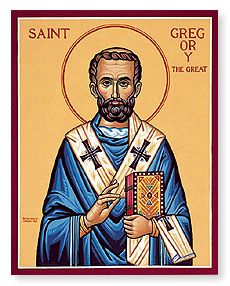
As I was studying for this week’s sermon, these words from the Church Father Gregory the Great concerning Job 1:21 stood out to me:

Although [the devil] himself blasphemes God, he was created blessed; now the man [Job], even though struck down, sings a hymn of glory to God. It is incumbent upon us to notice that our enemy wounds us with as many darts as he attacks us with temptations. For we stand in the front line of battle every day, and every day we receive the darts of his temptations. Still, we too throw darts at him when we are overwhelmed with troubles if we reply humbly. Blessed Job was struck down by the loss of his possessions and the death of his sons, but he turned his pain into praise of the Creator, saying, “God gave it and God took it back; God has done what he pleased; blessed be the name of God.” [Job] struck down the proud enemy with humility, he laid the cruel foe out flat with patience. So let us not believe our warrior was wounded without inflicting wounds himself. As often as he was hit he praised God with patient words, and in so doing he let fly his darts at the adversary’s breast, and the wounds he inflicted were more serious than those he sustained.

-Gregory the Great, Moral Reflections on the Book of Job, Vol.1, trans. Brian Kerns, OCSO (Athens, OH: Cistercian Publications, 2014), 144-145.

Jenny Geddes’ Stool

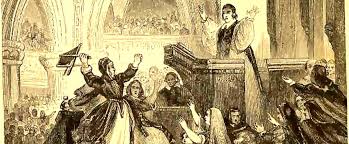
One of my favorite (and one of the funniest) stories in the history of Scottish Presbyterianism is that of Jenny Geddes. When King Charles I took the throne, and with his Archbishop of Canterbury, the rogue William Laud, sought to remove the Reformed influence from the Church of England, they also thought it best to introduce an episcopal prayer book for (what was at that time) the nominally episcopal Church of Scotland. Upon its first reading in St. Giles’ Cathedral in Edinburgh (which had been the church of John Knox in a previous generation), a market-trader named Jenny Geddes stood up and tossed her stool at the priest’s head. A riot ensued which eventually led to what was called “The Bishop’s War” in which Charles I tried to suppress the Scots. The Scottish Covenanters (those who had signed the National Covenant in 1638) defeated both Royalist forces and the English army, episcopacy was expelled from Scotland, and the Church of Scotland became purely Presbyterian. Of course, there’s much more to the story than this, but it’s an interesting take that, seemingly, Presbyterianism in Scotland grew to prominence after a long decay through one woman who was fed up with royal and episcopal interference in the Kirk.

King Charlie’s dog did bark his bark

From the dais of St. Giles’ kirk.

Brave Jenny could not keep her seat,

But rose indignant to her feet

And at his head she tossed her stool,

Hard at episcopacy’s fool:

“The de’il wi’ colic fill your bowels!

No mass book’s consonants or vowels

Will uttered be in Scottish ears!”

Then others shook the kirk with cheers.

To those who lead, be still and learn,

Or else ye too will have your turn;

Your sycophants may kiss your ring,

But in the Kirk, the Christ is King!